
Hydrogen Production
Carbon-free hydrogen through water electrolysis — engineered electrolyzer solutions built on advanced coated-titanium and nickel electrode technology, delivered end to end.
Splitting water into clean energy
Electrolysis powered by renewable energy is the key technology for carbon-free hydrogen. Water is split into hydrogen and oxygen under the influence of electricity with zero carbon emissions, in a unit called an electrolyzer.
Overall reaction
2 H₂O + electricity → 2 H₂ + O₂
Coupled with solar or other renewables, the process produces green hydrogen for storage, mobility, and industrial use.
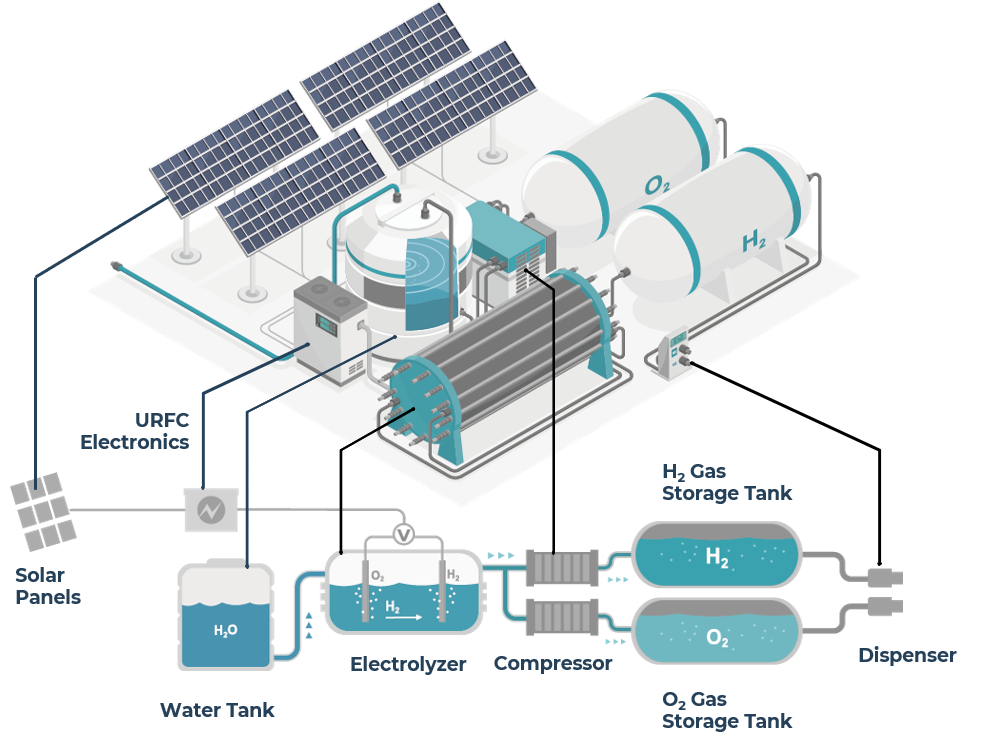
Three routes to green hydrogen
We help you select and engineer the right technology for your capacity, power source, and purity needs.
Alkaline Water Electrolysis
A mature, cost-effective technology for industrial hydrogen up to the multi-megawatt range, using a KOH/NaOH electrolyte and nickel-based electrodes.
- Lowest stack capital cost
- Proven at large scale
- Best for steady baseload operation
Proton Exchange Membrane
A compact, high-current-density technology using a solid polymer electrolyte and platinum/iridium-coated titanium electrodes — safe, responsive, and renewable-ready.
- High purity hydrogen
- Fast, dynamic response
- Small footprint, no caustic electrolyte
Solid Oxide Electrolysis
A high-temperature steam electrolysis technology (500–850 °C) reaching the highest efficiency, currently advancing toward long-term commercial stability.
- Highest energy efficiency (~89%)
- Uses high-temperature steam
- Emerging, next-generation
Alkaline Water Electrolysis
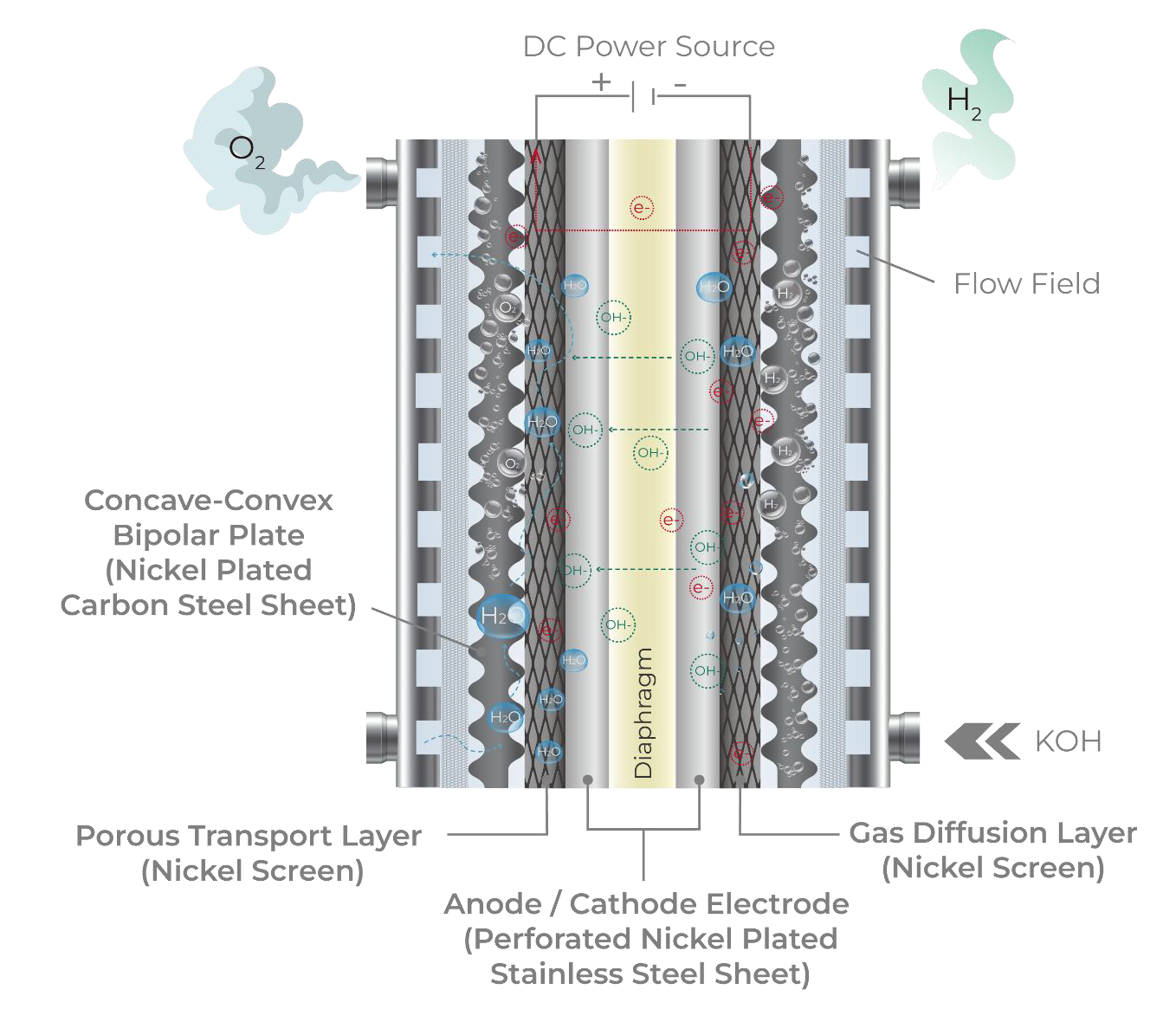
AWE is the most mature and cost-effective route to industrial-scale hydrogen. A direct current is passed between two electrodes immersed in a liquid alkaline electrolyte (KOH or NaOH), while a diaphragm keeps the hydrogen and oxygen streams separated. It runs reliably from the kilowatt to the multi-megawatt range on steady baseload power.
Because it avoids precious-metal catalysts, AWE offers the lowest stack capital cost of the three technologies — making it the workhorse for large, continuous green-hydrogen plants.
Advanced technology
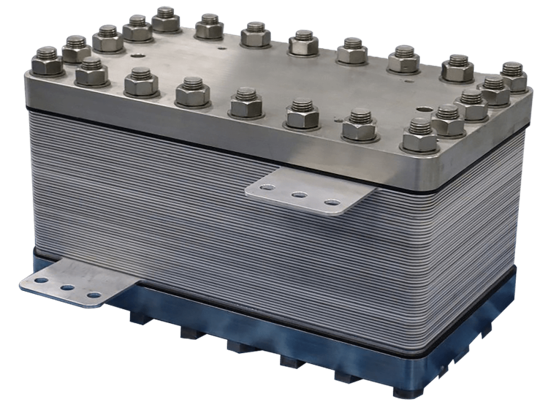
Our AWE cells are built on nickel-based materials engineered for high current density: concave-convex bipolar plates of nickel-plated carbon steel, perforated nickel-plated stainless-steel electrodes, and nickel-screen porous transport and gas-diffusion layers. Multi-alloy nickel coatings applied by thermal spraying, electrodeposition, and heat treatment lift efficiency and extend service life.
Proton Exchange Membrane
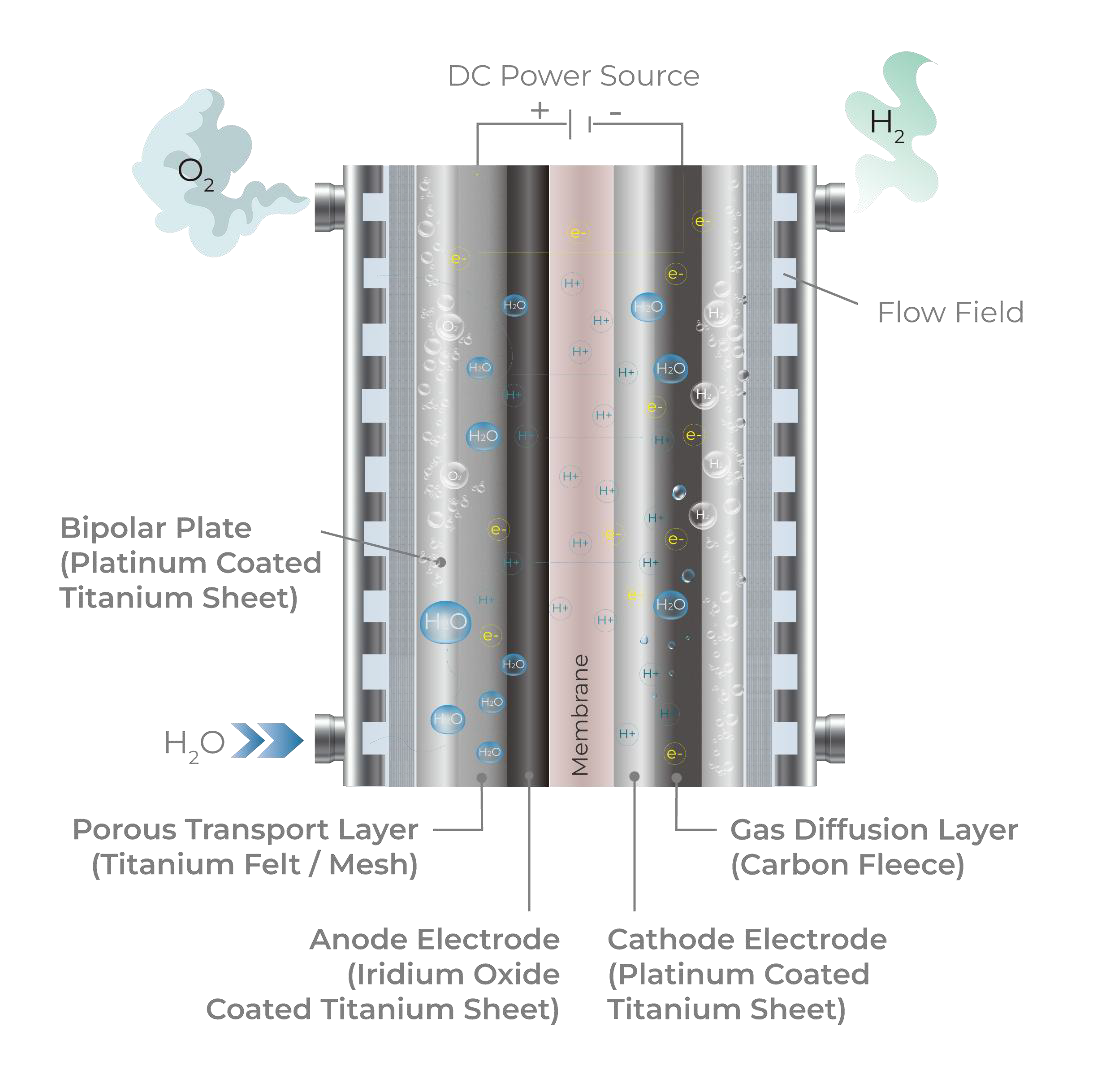
PEM electrolysis uses a solid polymer membrane as the electrolyte, fed with pure water rather than a caustic solution. Protons migrate across the membrane while electrons travel the external circuit, producing high-purity hydrogen at high current density in a remarkably compact cell.
Its fast, dynamic response makes PEM the ideal partner for intermittent renewable power — ramping up and down with solar and wind while delivering hydrogen pure enough for fuel cells and electronics.
Advanced technology
The acidic, high-potential PEM environment demands precious-metal coatings on titanium: platinum-coated titanium bipolar plates, iridium-oxide coated titanium anodes, platinum-coated titanium cathodes, and titanium felt/mesh transport layers. Vacuum sintering at ≥1200 °C locks the coatings to the substrate, so catalyst consumption stays extremely low while activity and lifetime stay high.
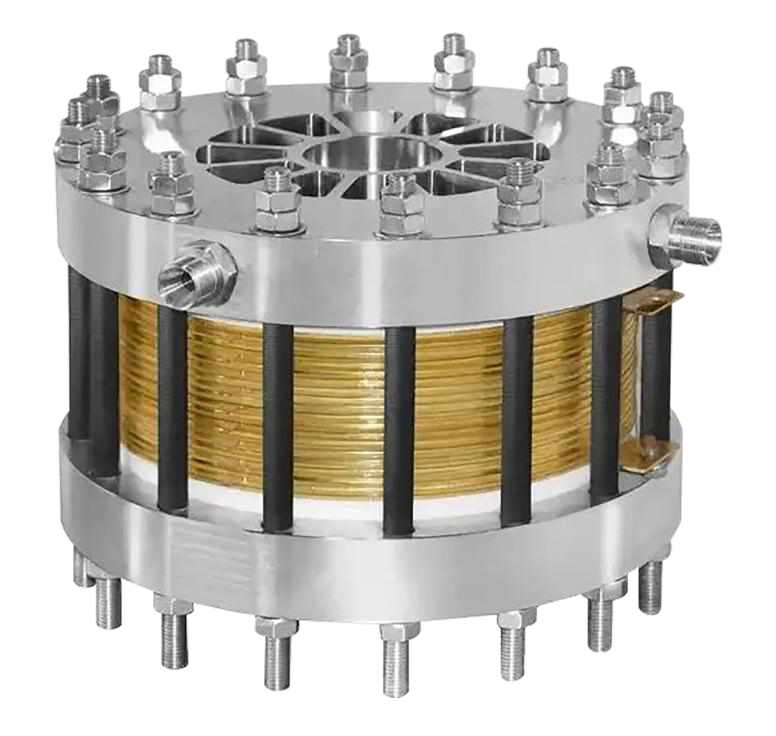
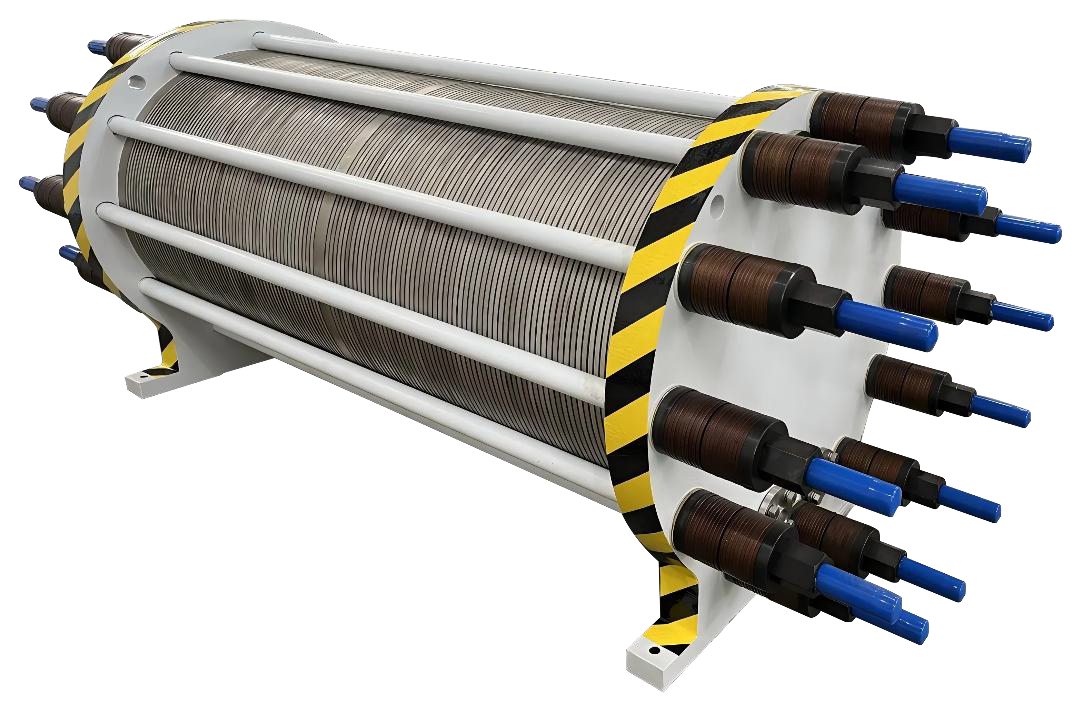
Characteristics of typical electrolyzer cells
| Parameter | AWE | PEM | SOEC |
|---|---|---|---|
| Electrolyte | KOH / NaOH | PFSA polymer membrane | Yttria-stabilised zirconia |
| Operating temperature | 70–90 °C | 50–80 °C | 700–850 °C |
| Current density | 0.2–0.8 A/cm² | 1–2 A/cm² | 0.3–1 A/cm² |
| H₂ purity | 99.5–99.9998% | 99.9–99.9999% | 99.9% |
| Efficiency | 50–78% | 50–83% | ~89% |
| Stack lifetime | ~60,000 h | 50,000–80,000 h | ~20,000 h |
| Stack capital (≥1 MW) | USD 270/kW | USD 400/kW | > USD 2,000/kW |
Electrode expertise at the core
Electrolyzer performance is decided at the electrode. With years of engineering experience, we develop high-quality electrode materials and custom coatings tailored to long-lasting, high-efficiency operation.
Coated-titanium electrodes
Platinum- and iridium-oxide coated titanium anodes and cathodes deliver superior activity for the OER and HER in PEM electrolyzers, optimising output and life.
Advanced nickel-based catalysts
For AWE, we integrate multi-alloy nickel electrodes via thermal spraying, electrodeposition, and heat treatment to lift efficiency at high current densities.
Long-service coatings
Vacuum sintering at ≥1200 °C ensures total coating adhesion, so consumption is extremely low and uniform — measured in milligrams per ampere-year.
High current density
Our nickel electrode technology supports current densities up to 6000 A/m² with strong resistance to current fluctuation and a long service life.
Efficient power use
Rated DC power consumption of 4.0–4.5 kWh/Nm³ H₂ with a wide 20–120% power adjustment range for flexible operation.
Renewable-ready
Systems are engineered to couple with solar and other renewable sources for truly carbon-free green hydrogen production.
One partner, from concept to commissioning
From technology selection to a ready-to-run system, our engineers own every stage of the project.
- 1
Demand Analysis
We clarify your capacity target, power source, purity, and site conditions.
- 2
Solution Proposal
We recommend the right electrolyzer technology and draw up an all-in-one plan to budget.
- 3
Equipment Supply
Electrodes, stacks, and balance-of-plant are manufactured and supplied by us.
- 4
Commissioning
Our engineers handle detail engineering and hand the system over ready to run.
- 5
On-site Acceptance
Final performance verification is carried out at your site before handover.
Building a green hydrogen project?
Share your target capacity, power source, and purity requirements. We'll recommend the right electrolyzer technology and engineer it end to end.